Should you wear a continuous glucose monitor without diabetes?
CGMs have moved into the wellness mainstream. The evidence for their value in non-diabetic users is limited but the insights they provide about food and lifestyle responses are often surprising.
What CGMs Measure
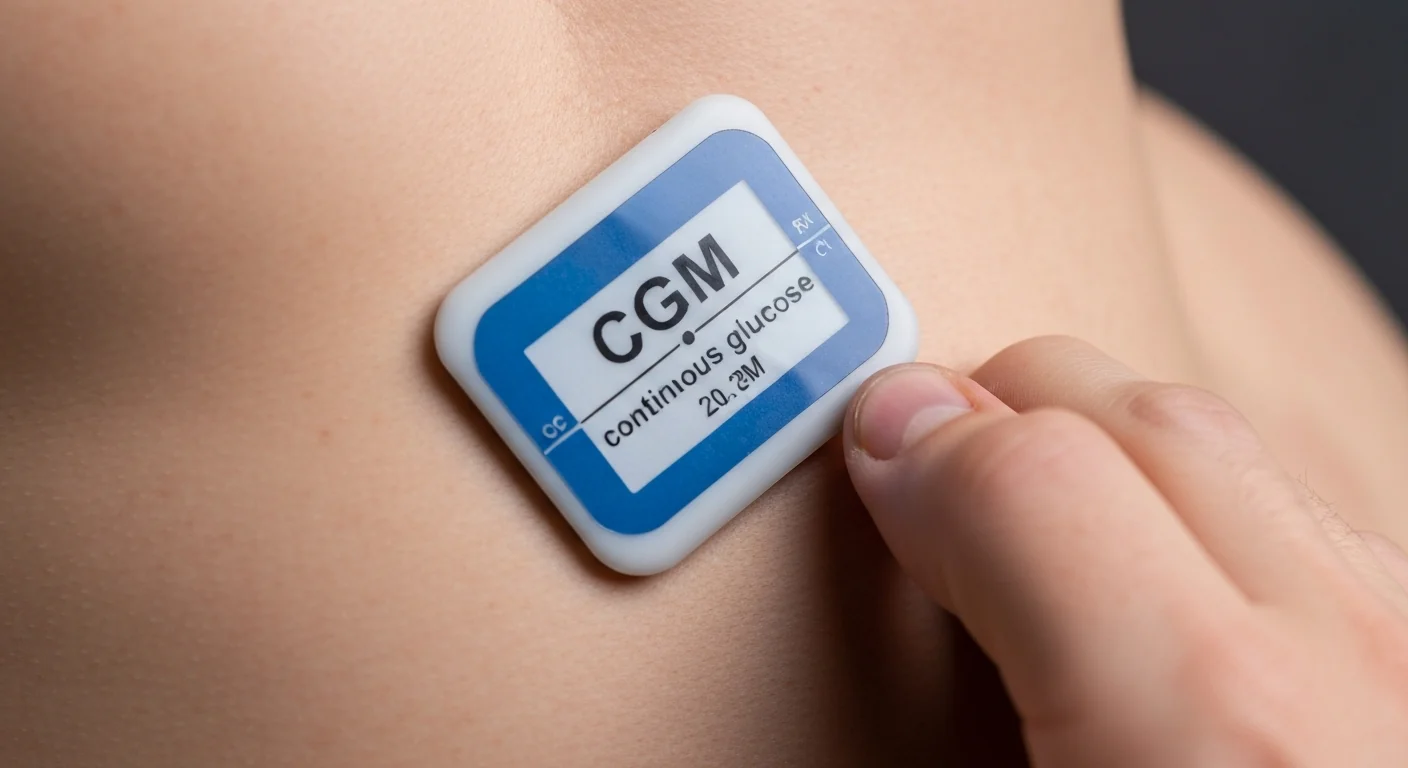
Continuous glucose monitors measure interstitial glucose (fluid between cells) every 5-15 minutes via a small sensor worn on the upper arm or abdomen. They produce a continuous trace of glucose fluctuations throughout the day and night, revealing responses to individual meals, exercise, stress, and sleep that a finger-prick test or HbA1c cannot capture.
What CGM Use in Non-Diabetics Has Revealed
Studies using CGMs in healthy adults have produced several surprising findings:
- Inter-individual glucose responses to identical meals vary enormously - a study by the Weizmann Institute found that white bread (assumed uniformly glycaemic) produced widely different responses between participants, some equivalent to table sugar and some barely any rise at all.
- Sleep quality strongly predicts next-day glucose handling - a night of poor sleep consistently produces higher and more prolonged post-meal glucose responses.
- Exercise timing relative to meals significantly affects glucose responses - a 10-minute walk after eating blunts post-meal spikes meaningfully.
- Stress events produce glucose spikes without any food consumption - a finding that surprises many first-time CGM users.
"CGM data has revealed that the glycaemic response to food is far more personal than nutrition tables suggest. The personalisation insights are real even if the clinical benefit in healthy people is still unproven." - Eran Segal, Weizmann Institute
The Evidence Limitations
No RCT has shown that CGM use by non-diabetic individuals produces better health outcomes than standard advice. The data is interesting but the question of whether acting on it improves long-term metabolic health remains open. The risk of over-medicalising normal variation and creating food anxiety is real.
CGMs in Practice
A 2-week CGM trial can be genuinely educational for understanding personal food-glucose responses, the impact of sleep and stress on metabolism, and the effect of activity on post-meal spikes. After the trial, the most useful insights are usually: 1-2 specific foods that produce outsized responses, and confirmation that post-meal walks work. Ongoing CGM use in non-diabetic individuals is difficult to justify on current evidence.