Shopping for groceries with your health in mind
Food environment research is unambiguous: what is in your home determines what you eat far more than in-the-moment decisions. Shopping strategically is upstream health.
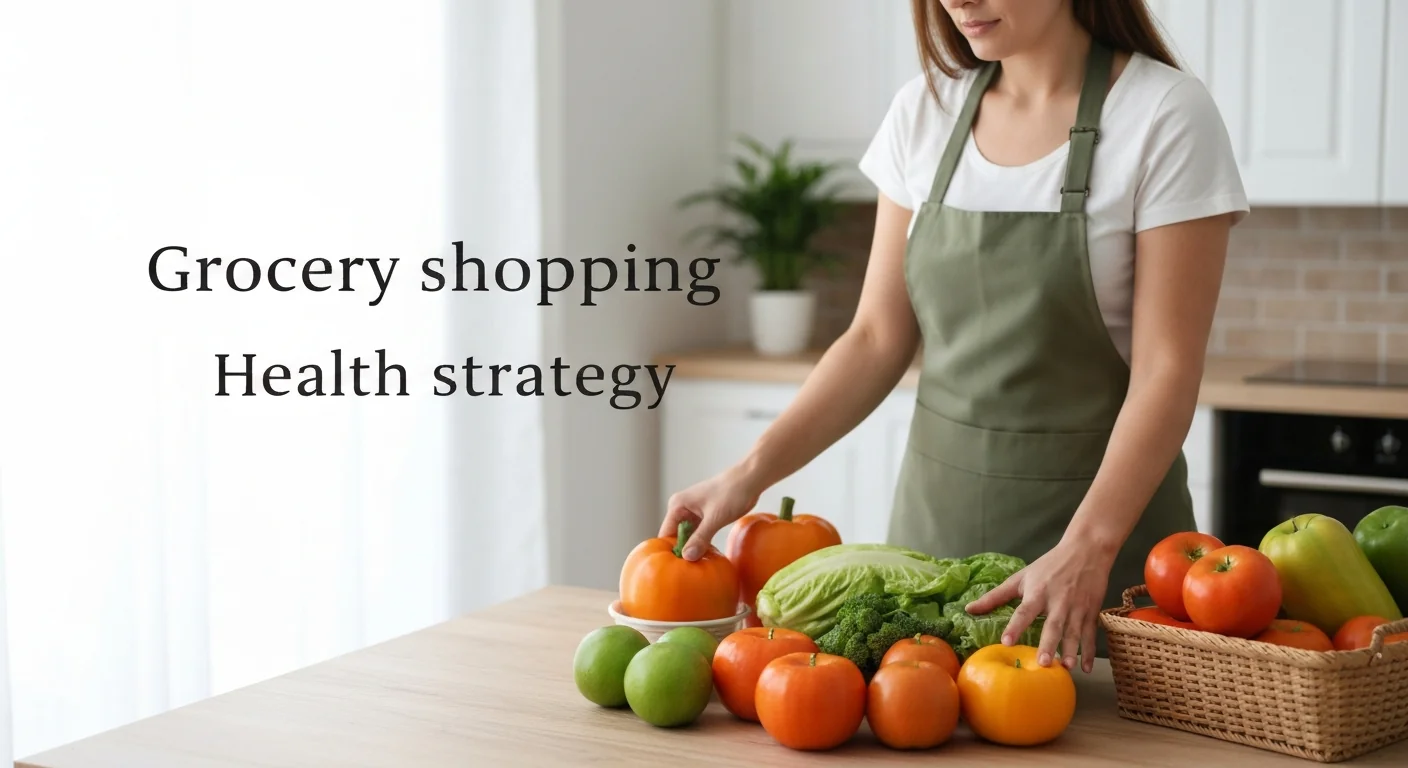
The Home Food Environment
Brian Wansink's research at Cornell (and subsequent replications) established that the foods most visible and accessible in the home are the foods most frequently consumed — regardless of stated preferences. If fruit is at eye level in the refrigerator and behind-the-door storage for less-frequently-used condiments, fruit consumption increases without any other intervention.
The corollary: if ultra-processed, hyperpalatable foods are the most visible and accessible options at home, they will be consumed most frequently — regardless of intentions, knowledge, or motivation. The home food environment is the default food environment, and defaults dominate.
Shopping as the Upstream Intervention
Grocery shopping is the critical upstream decision that determines the home food environment. All downstream decisions about what to eat operate within the constraints set at shopping. A person who shops for whole foods and minimises processed food purchases cannot eat poorly at home regardless of later motivation failure. A person who shops without a plan and includes numerous processed options faces hundreds of difficult decisions throughout the week.
Evidence-Based Shopping Strategies
Shop With a List
Shoppers who use a prepared list buy significantly more planned items and fewer impulse purchases than those without a list. Multiple studies show list use reduces calorie content of the grocery basket and increases fruit and vegetable purchases. The list should be created from a weekly meal plan to ensure ingredients for intended meals are available.
Shop After Eating
Shopping while hungry reliably increases calorie-dense food purchases. A 2013 study found that hungry shoppers purchased more high-calorie food items, and this effect generalised to non-food shopping (they also made more quantity purchases in general, suggesting hungry shoppers are more impulsive). Shopping after a meal or snack is a simple protective strategy.
Perimeter-First Shopping
The perimeter of most grocery stores contains fresh produce, proteins, and dairy — whole foods with minimal packaging. The interior aisles contain primarily processed and packaged foods. Starting with the perimeter ensures fresh foods are visible and front-of-cart before processed food aisles are encountered — and a cart that is already 70% full with whole foods has less room for discretionary processed items.
The "Not in the House" Rule
For foods identified as personal weak points — those consumed past the point of genuine preference when available — the simplest intervention is not purchasing them. This is not restriction through willpower (not eating them when present) but upstream prevention (not creating the exposure situation). Every resisted temptation draws from the daily self-control budget; eliminating the temptation source eliminates the cost entirely.
The 80% Rule
A pragmatic guideline that avoids the rigidity of "clean eating": if 80% of the grocery basket consists of minimally processed, whole foods, the 20% of discretionary items provides variety and enjoyment without dominating the diet. This is consistent with the dietary patterns (Mediterranean, DASH, traditional Japanese) with the strongest longevity evidence, which are not characterised by perfect food quality but by predominantly whole food foundations with moderate flexibility.