Easy ways to move more at home
The Built Environment and Movement
The environments we inhabit shape our movement behaviour without our awareness. An office building with stairs prominent and lifts hidden produces more stair use than the reverse -- not through changed motivation but through changed defaults. The same principle applies at home: environments designed to encourage movement produce more activity without requiring decision energy.
Friction Reduction for Home Movement
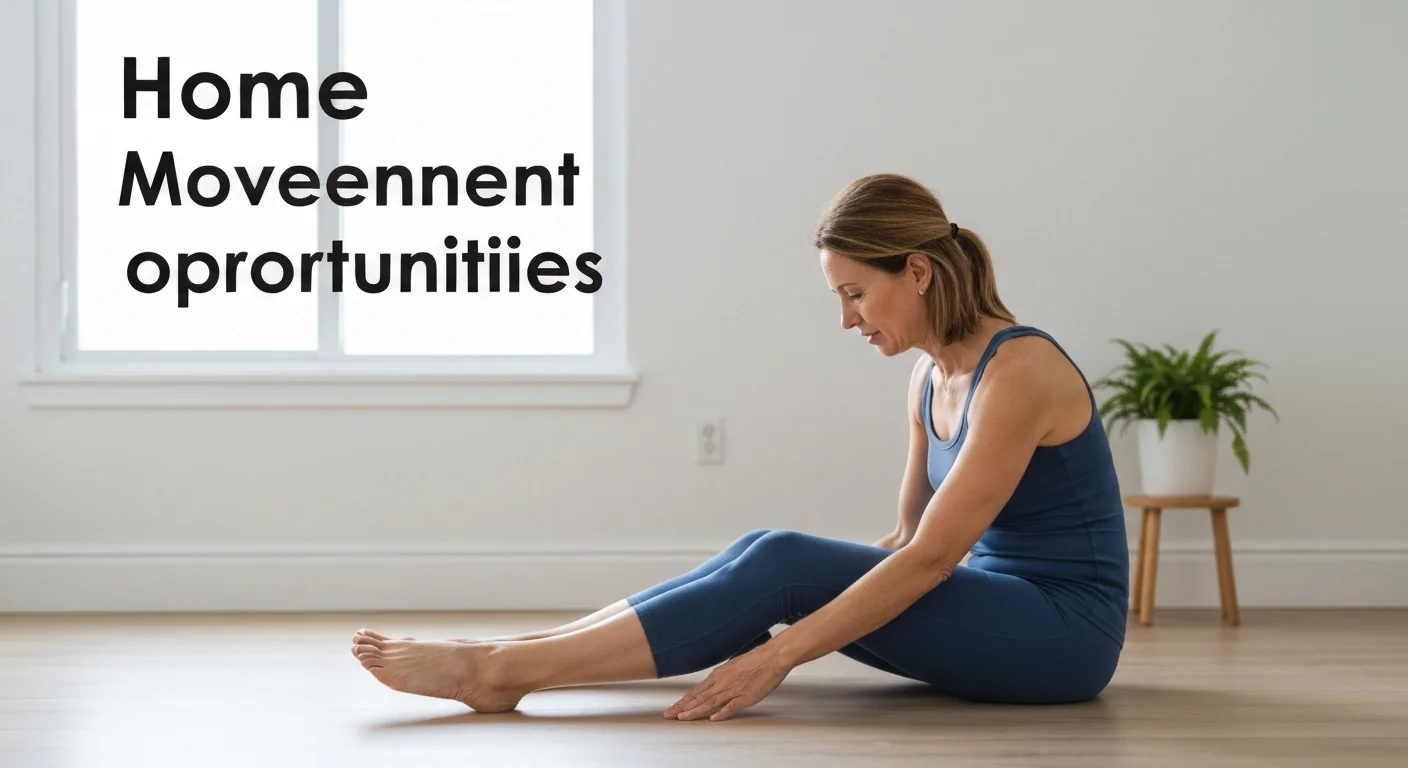
- A yoga mat or exercise space permanently set up eliminates the barrier of getting equipment out -- making a five-minute stretch as easy as a five-minute scroll
- A pull-up bar in a doorframe used regularly creates a micro-training opportunity every time the doorframe is passed
- Resistance bands on the desk or workspace prompt spontaneous use during breaks
- A standing or treadmill desk changes the default posture of work from sedentary to active
Movement Snacks
Movement snacks -- brief (2-5 minute) bouts of physical activity distributed through the day -- have been shown to produce meaningful metabolic and cardiovascular benefits compared to equivalent activity concentrated in single sessions. Ten two-minute walking breaks distributed through a sedentary workday improves glycaemic control more than a single 20-minute walk.
Activity Cues in the Home
Visible cues -- trainers at the door, weights in the living room, a water bottle on the desk -- serve as environmental prompts that increase the probability of movement without requiring willpower. Place equipment where you will see it rather than storing it out of sight.
Building Activity Into Your Living Space in Practice
Identify one home location that currently produces no movement opportunity and add one visible movement cue or piece of equipment. The friction reduction that results typically produces a 20-40% increase in spontaneous use within the first week.
From the Good.You blog: How to Create a Lower-Stimulation Living Space