How your circadian rhythm runs your day
Your body runs on a precise internal timer set by light, temperature, and behaviour. Disrupting it costs more than sleep.
What Is the Circadian Rhythm?
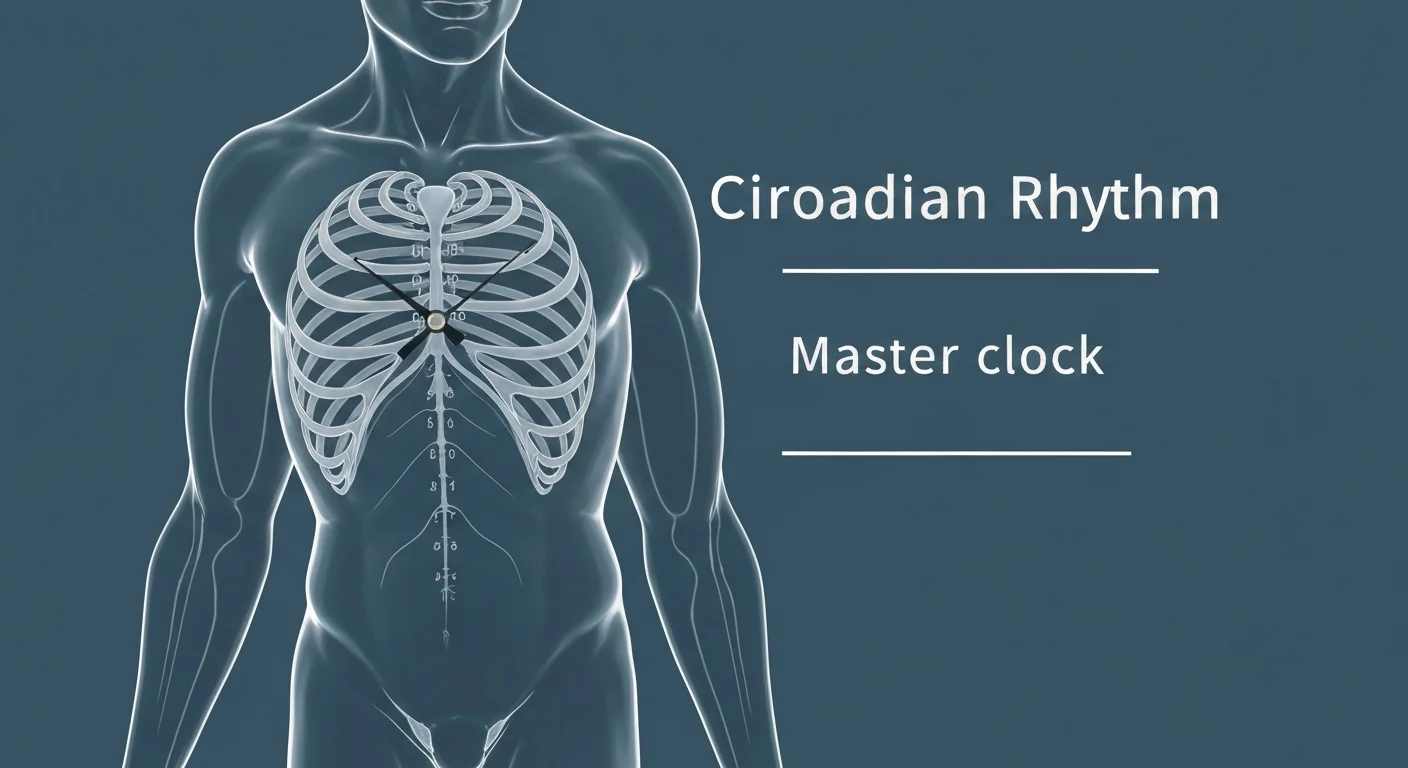
The circadian rhythm is a roughly 24-hour biological cycle that governs nearly every physiological process — from hormone release and body temperature to metabolism, immunity, and mood. It is coordinated by the suprachiasmatic nucleus (SCN) in the hypothalamus, which receives light signals directly from the retina.
The SCN acts as the master clock, but virtually every cell in the body has its own peripheral clock that takes cues from the master. When these clocks fall out of sync — through irregular sleep, shift work, jet lag, or artificial light at night — the consequences extend far beyond tiredness.
The Light-Dark Signal Is Primary
Light is the dominant zeitgeber (time-giver). Morning light exposure suppresses melatonin and raises cortisol — the natural alerting signal that prepares the body for activity. Evening darkness allows melatonin to rise, signalling that sleep is approaching.
The problem: modern environments expose us to artificial light (particularly blue-wavelength light from screens and LED bulbs) at times when the circadian system expects darkness. Even moderate evening light exposure delays the melatonin rise by 1.5–3 hours, pushing the sleep window later and compressing total sleep time.
A 2019 study in Current Biology found that exposure to just two hours of bright screen light before bed reduced melatonin by 22% and shifted sleep onset by 40 minutes.
Misalignment: The Hidden Health Cost
Chronic circadian disruption — even mild, everyday misalignment — is associated with:
- Metabolic dysfunction — impaired insulin sensitivity and glucose regulation, partly because pancreatic clock genes control insulin secretion timing
- Immune dysregulation — immune cells have circadian rhythms; disruption impairs antibody response and increases inflammatory markers
- Mood disorders — circadian misalignment is strongly linked to depression and bipolar disorder; light therapy works in part by resynchronising the clock
- Cardiovascular risk — heart attacks and strokes are more common in the early morning, when circadian-driven blood pressure surges peak
- Cancer risk — shift workers have elevated rates of breast and colorectal cancer; the WHO classifies night shift work as a probable carcinogen
Social Jetlag
Most people maintain different sleep schedules on workdays versus weekends — an inconsistency called "social jetlag." Research by Till Roenneberg at Ludwig Maximilian University found that the average person experiences 1–2 hours of social jetlag per week, and each additional hour is associated with a 33% increased odds of being overweight.
Evidence-Based Ways to Strengthen Your Rhythm
- Morning bright light — 10–30 minutes of outdoor light within an hour of waking sets the clock earliest and most powerfully. On overcast days, this still provides 10–50× more light than typical indoor environments.
- Consistent wake time — waking at the same time every day (including weekends) is the single strongest behavioural anchor for the circadian system.
- Dim light after 9pm — use warm, low-intensity lighting in the evening. Candlelight (approximately 1,900K) and red-spectrum bulbs minimise circadian disruption.
- Time-restricted eating — aligning food intake to daylight hours (roughly a 10–12 hour eating window ending 2–3 hours before sleep) strengthens peripheral clock synchrony.
- Temperature management — the body needs to drop core temperature by 1–3°F to initiate sleep; a cool bedroom (65–68°F / 18–20°C) supports this process.
The circadian system is not simply about sleep — it is the organising principle of physiological time. Protecting it is one of the highest-leverage health interventions available.