Do ice baths speed up recovery?
Cold water immersion is widely used by athletes for recovery. The evidence is nuanced - it reduces soreness but may blunt long-term training adaptations.
What Cold Water Immersion Does Acutely
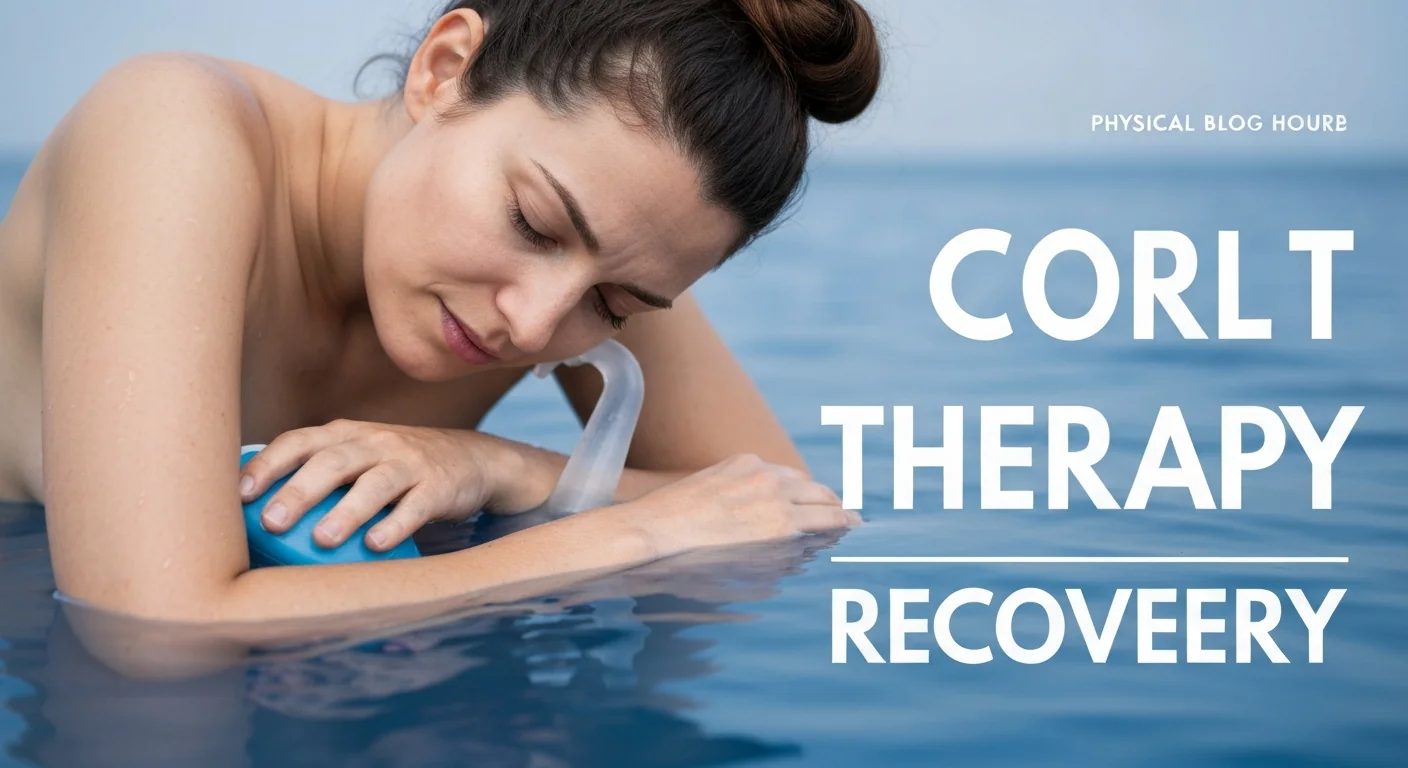
Cold water immersion (CWI) - typically 10-15 minutes at 10-15 degrees Celsius - produces several acute physiological effects: vasoconstriction that reduces oedema and tissue swelling, reduced nerve conduction velocity that dulls pain signals, and decreased metabolic activity in the cooled tissue. These mechanisms explain why CWI reliably reduces perceived soreness in the 24-48 hours after intense exercise.
The Adaptation Blunting Problem
A critical finding from Roberts et al. (2015, Nature) challenged the widespread use of post-exercise CWI for strength athletes. The study found that CWI after resistance training significantly blunted long-term strength and muscle mass gains compared to active recovery. The mechanism: the inflammation and reactive oxygen species that CWI suppresses are also the signals that trigger muscle protein synthesis and mitochondrial biogenesis. Cooling them down after training is cooling down the adaptation signal.
"Cold water immersion after strength training is counterproductive for hypertrophy. You are literally cooling down the adaptation process." - Dr. Jonathan Roberts, Queensland University of Technology
When CWI Is Appropriate
- Tournament or multi-day competition contexts where recovery between sessions within 24-48 hours takes priority over long-term adaptation
- Endurance athletes in heavy training blocks where soreness management enables training continuation
- Inflammatory conditions where reducing swelling is a clinical priority
When CWI Should Be Avoided
- After strength and hypertrophy-focused sessions if long-term muscle building is the goal
- During dedicated adaptation phases of a training programme
Cold Water Immersion in Practice
Use CWI strategically, not habitually. If you are in a competition block or need to train hard again within 24 hours, it is a useful tool. If you are in a hypertrophy or strength phase, save it for the off-season. Contrast therapy (alternating hot and cold) lacks strong evidence for either the adaptation benefits of heat or the recovery benefits of cold.