Comparing sugar and artificial sweeteners
Both excess sugar and artificial sweeteners carry legitimate concerns. The evidence, though imperfect, points toward specific conclusions - and a third option most people overlook.
Why This Is Genuinely Contested
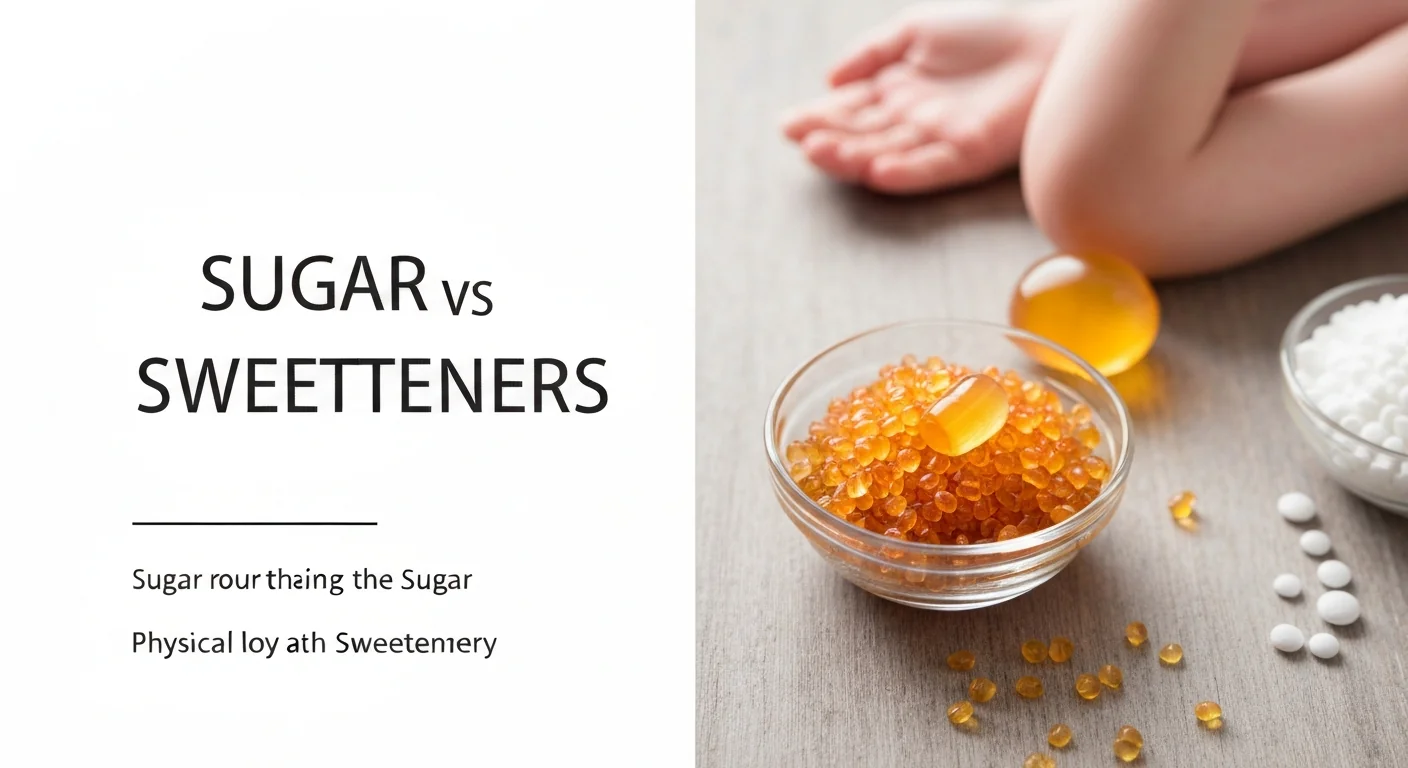
Few nutrition debates generate more heat than sugar vs. sweeteners. This is partly because both sides have legitimate evidence; partly because industry funding has contaminated much of the research on both sides; and partly because individual metabolic responses vary meaningfully. What follows is the evidence as clearly as it can be assessed, with the caveats noted.
The Case Against Excess Sugar
- Added sugar - particularly fructose in liquid form - is metabolised differently from glucose, with higher rates of liver conversion to fat (de novo lipogenesis).
- Sugar-sweetened beverages have the strongest causal evidence linking a specific food to obesity and type 2 diabetes - partly through caloric excess, partly through independent metabolic pathways.
- There is strong evidence for a causal role of free sugars in dental caries - probably the most unambiguous dietary harm in nutrition science.
The Case Against Artificial Sweeteners
- A 2022 large-scale observational study in PLOS Medicine found associations between artificial sweetener consumption and cardiovascular events - aspartame specifically with cerebrovascular events.
- Some randomised evidence suggests certain sweeteners (particularly saccharin) alter gut microbiome composition in ways that impair glucose tolerance.
- Evidence that sweeteners reduce overall calorie intake in habitual users is mixed - some studies show compensation through other foods.
"The choice between sugar and sweeteners is often presented as binary. The better comparison is both versus water, fruit, and whole food alternatives." - Christopher Gardner, Stanford
What the WHO Now Says
In 2023, the WHO issued a conditional recommendation against non-sugar sweeteners for weight management, citing insufficient evidence of long-term benefit and potential harm signals. This does not mean sweeteners should be avoided - it means they should not be assumed safe in unlimited quantities.
Sugar and Sweeteners in Practice
The highest-impact action for most people is reducing total sweetness exposure - training palate tolerance downward rather than substituting one type of sweet for another. Where a sweet option is needed, the context matters: a diet drink instead of a regular drink is a meaningful calorie reduction; artificially sweetened snacks in large quantities is a different calculation entirely.