Managing your attention, not just your calendar

The Shift from Time to Attention
Time management assumes that the scarce resource is hours. Attention management recognises that the scarce resource is focused cognitive capacity. Eight hours of distracted work produces less than three hours of genuinely focused work. Managing time is necessary but insufficient -- managing attention is what actually determines output quality.
The Cost of Task-Switching
Research on cognitive switching costs shows that returning to full engagement with a task after an interruption takes an average of 23 minutes. In a typical knowledge worker's day, with notifications, messages, and self-interruptions occurring every few minutes, sustained deep focus rarely occurs. The cumulative cost is enormous.
Attention Architecture
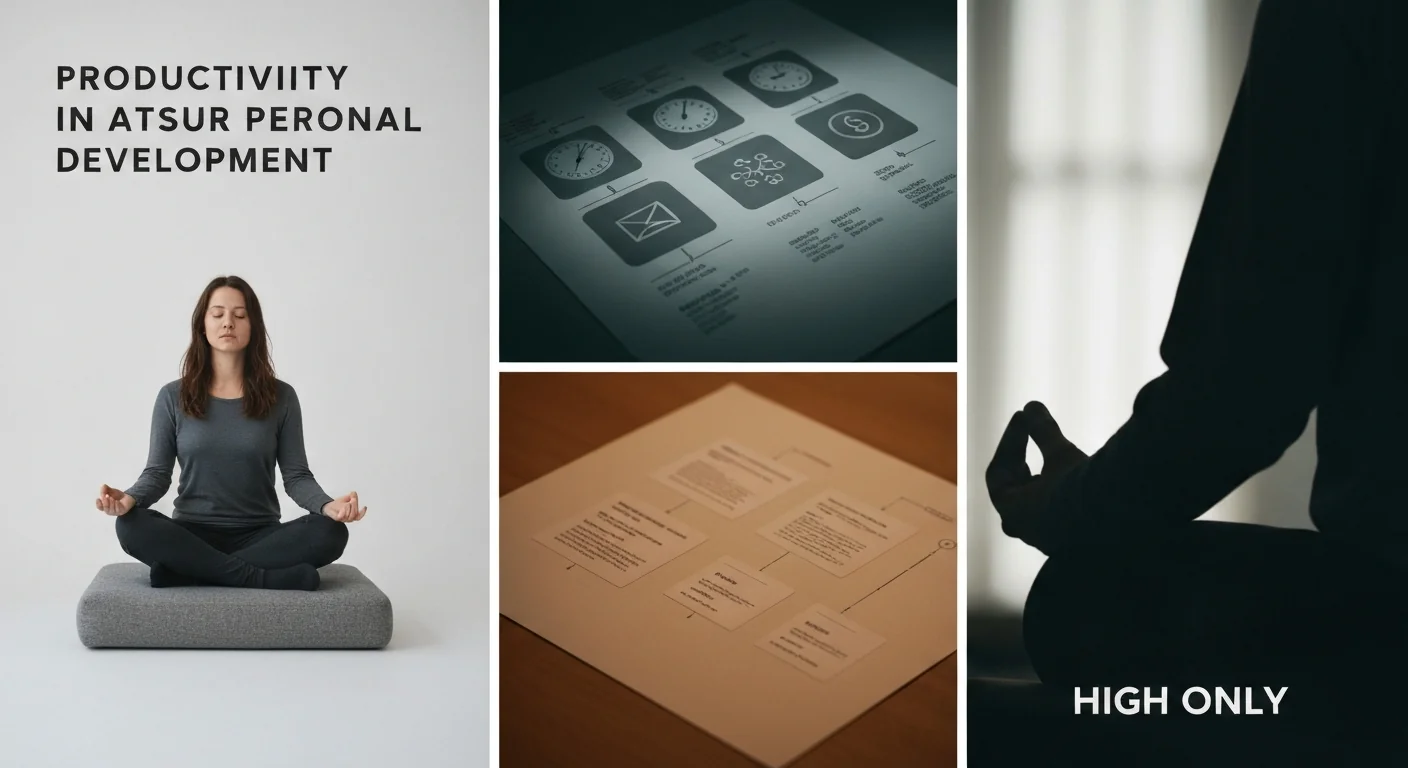
Effective attention management requires designing a day with distinct modes:
- Deep work blocks: 60-90 minute windows of complete focus, no interruption, on the highest-value task
- Shallow work batches: scheduled windows for email, messages, administrative tasks -- handled in batches rather than continuously
- Recovery periods: genuine rest between deep work blocks, not semi-work (checking your phone is not recovery)
Protecting Attention at the Input Level
Notifications are attention requests from others, delivered on their schedule rather than yours. Default to notification-off for all non-emergency channels. Check communications on a schedule rather than reactively. The adjustment is uncomfortable for a week and permanently valuable thereafter.
Why Focus Matters More Than Time in Practice
Identify the one output that, if produced consistently, would have the highest impact on your most important goal. Protect one daily block for that output above all other scheduling. Everything else is time management; that is attention management.